 CDA Coliving
Mould in a Shared Home
Why it appears, how to stop it, how to clean it yourself in ten minutes — and when to call us.
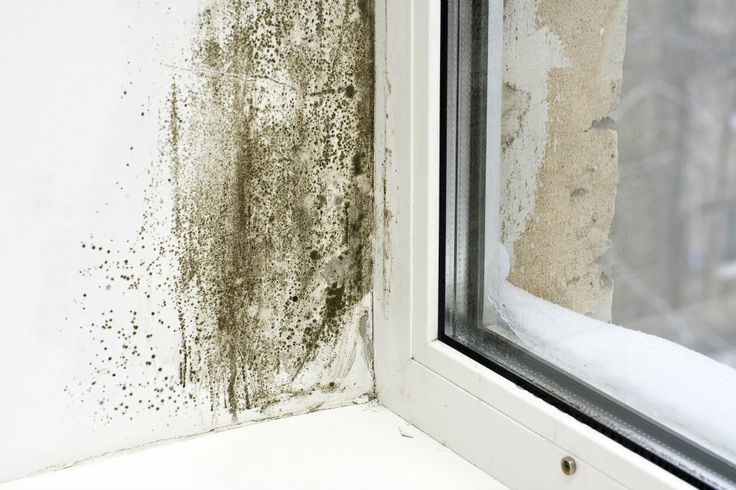
Mould is a moisture problem
Mould and mildew are fungi that occur naturally everywhere. They only take hold when there's more moisture in the air than can escape. Remove the moisture and the mould has nothing to grow on.
In a shared house that matters more than in a one-person flat. Several people showering, cooking, boiling kettles and drying laundry produce a great deal of water vapour every day — and that vapour doesn't stay in the room it came from. It travels down the hallway and settles on the coldest surface it finds, which is often somebody else's bedroom wall.
That's the part worth remembering: in coliving, ventilation is a shared responsibility. One person drying washing in a closed room can cause mould in the room next door.
Who's responsible for what
| Your responsibility | CDA's responsibility |
|---|---|
| Ventilating the property — opening windows and blinds, running exhaust fans | Fixing the building causes: leaks, burst pipes, broken exhaust fans, rising damp, faulty seals |
| Day-to-day mould from condensation — wiping it off tiles, sills, grout and shower screens as it appears | Treating mould that comes from a structural or plumbing fault, at no cost to you |
| Drying clothes without flooding the house with moisture | Responding to your maintenance report within the published timeframes |
| Your own belongings — coats, bags and shoes in the wardrobe. CDA is not responsible for mouldy personal items | Providing the property free of mould at the start of your occupancy |
| Reporting mould as soon as you see it, through the maintenance form | Recording the condition of the room in your Condition Report at move-in |
Check your room for damp, musty smells and mould in your first week and report anything you find. After 7 days the room is deemed accepted in the condition described in your Condition Report — and mould that appears later is presumed to have started during your occupancy.
How to prevent it
Almost all mould in our properties is condensation-based, and condensation is a lifestyle problem before it is a building problem. These habits are what actually make the difference.
After every shower
Exhaust fan on, and leave it running for 15–20 minutes after you finish. Open the bathroom window and close the bathroom door — you want the steam going outside, not into the hallway. Squeegee or wipe the screen and tiles.
While cooking
Rangehood or kitchen exhaust on, lids on pots, and a window open. Boiling pasta with the lid off puts an astonishing amount of water into the air of a shared kitchen.
Cross-ventilate daily
Keep windows and curtains open as much as you possibly can — there's no minimum, more is always better. Two windows open on opposite sides of the house move far more air than one window cracked. Drawn curtains keep walls cold and damp, so open them whenever you're not sleeping.
Heating
Whenever you run a heater or air conditioner, keep a window slightly open. A warm sealed room is the single most reliable way to grow mould. Only oil-column heaters are permitted — see the House Rules.
Wardrobes
Air them out regularly and check seasonal coats, suits and bags — they're where mould is usually found first, and usually found too late. Moisture-absorbing beads are cheap and work well in a musty wardrobe.
Wet things
Wet coats, umbrellas and shoes dry outside or in the laundry — never in a bedroom. If you use a dryer, open windows and doors for cross ventilation while it runs.
Drying clothes — the number one cause
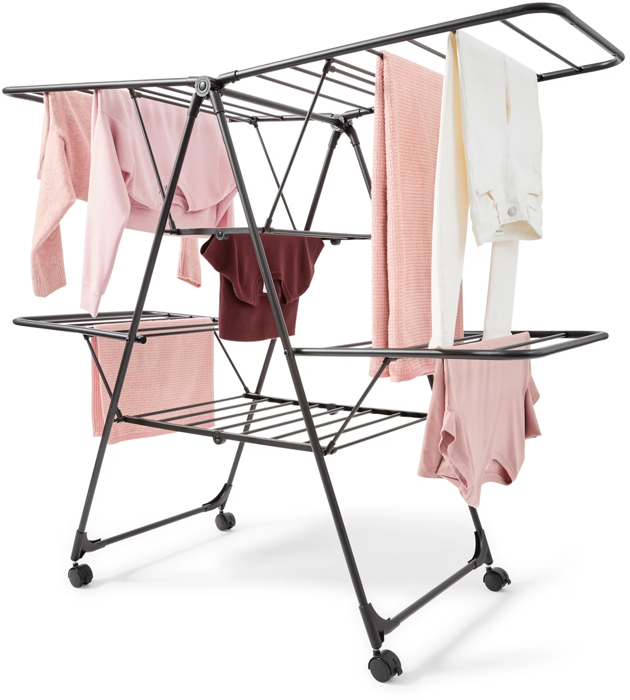
A single load of wet washing releases around two litres of water into the air as it dries. In a shared house that's the most common thing we can point to when mould appears.
- Best: dry outdoors, on the line or a rack in the yard.
- If you can't dry outdoors: use the drying area assigned to your property. Some houses have a laundry room; where the laundry is too small, a covered drying area is assigned instead. Ask us which one is yours.
- Your bedroom, only if you have to — window open and door closed, never with the room sealed up.
- Wet washing doesn't go wherever there's space. Not the hallway, the living room or the kitchen — that's a House Rule.
- Never drape wet clothes over a heater or radiator.
Mould caused by drying clothes in a closed room is chargeable to the occupant.
How to clean it yourself
Small spots of surface mould on tiles, grout, sills, shower screens and painted walls are ordinary cleaning, and catching them early keeps them from becoming a repair. Anything on the "report it to us" list further down is ours, not yours.
If you have asthma, an allergy, a breathing condition, a weakened immune system, or you're pregnant, send us a maintenance request instead and we'll arrange it — at no cost to you. The same goes if the smell is strong or the room can't be ventilated.
Step by step
- 1. Open the window and turn on the exhaust fan before you start.
- 2. Rubber gloves and safety glasses, every time — not only when spraying above head height.
- 3. Apply the cleaner and leave it to work for the time on the label — usually a few minutes. Don't scrub straight away.
- 4. Wipe off with a cloth or a stiff brush on grout. Rinse the cloth, don't reuse it dry.
- 5. Dry the surface completely, and keep the room ventilated afterwards so it doesn't come straight back.
Cleaning products are not supplied by CDA and are not reimbursed.
What to buy
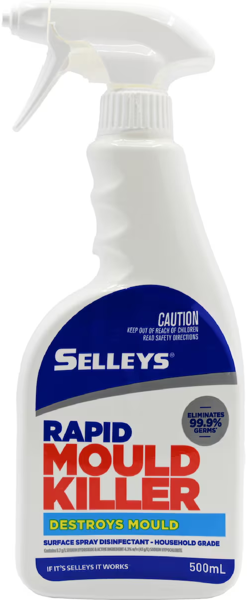
NSW Health suggests starting with mild detergent, or white vinegar diluted 4 parts vinegar to 1 part water — cheap, and it works on most surface mould. For stubborn patches, a supermarket mould spray or diluted bleach (250 mL of bleach in 4 litres of water) does the job. Follow the label and the safety directions on the bottle.
For mouldy clothes and fabrics, specialist laundry additives are sold at Bunnings and most supermarkets.
Bleach-based mould sprays must never be combined with vinegar, ammonia or other bathroom cleaners — the mixture releases chlorine gas, and with ammonia they release chloramine vapour. Both are genuinely dangerous in a small bathroom. Use one product, ventilate the room, and rinse surfaces before using anything else on them.
When to report it to us instead
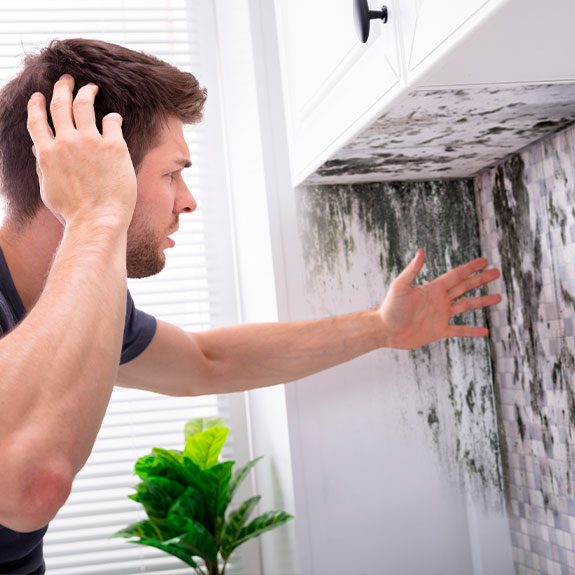
Some mould isn't a cleaning job — it's a building fault, and that's ours to fix. Submit a maintenance request straight away, with photos, if you see any of the following:
- Mould that keeps returning within days of being cleaned
- A patch larger than roughly an A4 sheet, or spreading across a wall or ceiling
- Mould accompanied by a water stain, a drip, bubbling paint or a musty smell with no obvious source
- Mould on or behind plasterboard, skirting boards, carpet or inside a wardrobe wall
- An exhaust fan that doesn't work, or a window that won't open
- Any leak at all, however small
How to report it
Always through the maintenance form at cdacoliving.info/Maintenance — that way it's logged and tracked. Include photos, which room it's in, and how long it's been there.
Additional cleaning needed because of mould build-up from poor ventilation or excessive heater use is charged to the occupant. Room deodorisation runs $200–$600, and mould found at your outgoing inspection comes out of your security deposit. Cleaning a few spots the week you notice them costs about $8. See the full Charge Schedule.