 CDA Coliving
Living at CDA
Maintenance, rent, utilities, sharing the house and transfers — your day-to-day, sorted.
Maintenance & Repairs
The faster we know, the faster we can fix it.
How to report an issue
Submit all requests through the official form, with photos or videos, a description, and how long it's been happening:
→ cdacoliving.info/Maintenance
Or by email: [email protected]. For urgent issues call (02) 8188 1605 — Option 3. The call itself is free — but if a technician is sent out for something that turns out to be non-urgent, the call-out cost may be charged (see the Charge Schedule in the House Rules).
Even if a repair isn't completed yet, never stop paying rent — withholding rent puts you in breach of your agreement.
Fire or smoke inside the property · assault · gas explosion or uncontrolled leak · a person unconscious or in medical distress · dangerous flooding. Police non-emergency: 131 444.
Priority levels & response times
| Priority | Examples | Response |
|---|---|---|
| Urgent | Serious water leak · blocked/broken toilet · serious roof leak · gas leak · no electricity · flooding · no water or hot water · stove/oven failure · fridge not working · anything making the property unsafe | Within 2 days |
| High — L1 | Mould · key or lock issues · no internet · taps · shower head · bins · lights & power points | Within 3 days |
| Medium — L2 | Washing machine/dryer · pest control · microwave, kettle, toaster · window issues · curtains/blinds · gardening · minor leak | Within 5 days |
| Low — L3 | Furniture replacement · minor damage (door, wall, paint) · mattress replacement | Within 10 days |
These are CDA's own service targets, not a legal standard — some repairs have timeframes set by law that override this table. Requests outside office hours (Mon–Fri, 9–5) are handled the next business day, but genuinely urgent repairs are arranged as fast as we can.
A smoke alarm that isn't working is always urgent. Report it straight away through the maintenance form at cdacoliving.info/Maintenance — it reaches the right team fastest — and it's repaired or replaced within 2 business days. Never remove an alarm or take its battery out; if it's chirping from a flat battery, report that too.
What's on you
- Minor maintenance: replacing light bulbs, cleaning windows, dusting, removing cobwebs
- Damage you cause — the repair cost is charged to you
- Reporting issues promptly, including mould as soon as you notice it — see the Mould Guide
Rent & Payments
How rent works — and what to do when billing raises questions.
How rent works
- Rent is always paid in advance
- You can request a rental ledger at any time for your full payment history
- The system updates every 24 hours — recent payments may not appear immediately
- Paid from a different account than usual? The payment may not be matched automatically — contact us
If you're going to be late, tell us before the due date — we can almost always work something out. Rent left unpaid for 7 days may lead to a one-week termination notice, and repeated late payments can end your agreement.
Common billing situations
| Situation | What to do |
|---|---|
| Received a debt email but already paid | If paid within 24 hrs, wait for the system to update. If it persists, request a rental ledger and breakdown at [email protected]. |
| Small extra charge on your bill | May be proportional rent adjustment, partial days, or a billing correction — ask for a detailed breakdown. |
| Credit balance with CDA | Credits may apply automatically, but always confirm with our team before assuming they offset your rent. |
| Paid from a different bank account, or in cash | Send proof of transfer — or your cash deposit receipt — to [email protected] so we can match it. |
Your security deposit is reserved for end-of-tenancy costs. It cannot be used as rent under any circumstances.
Rent increases
- Your occupancy fee cannot increase during the fixed term
- A new agreement after your term may have different rates
- During month-to-month, increases require at least 4 weeks' written notice
Utilities & Fair Consumption
Electricity, gas and water are included — subject to fair use.
The Fair Consumption Policy
- The property's baseline is the average daily usage (kWh) from supplier invoices for the same period over the previous 12 months
- If a billing period exceeds the baseline by more than 10%, the cost of the excess may be shared among occupants
- CDA always provides the supplier invoice and the calculation of any charge
- If an undeclared high-consumption appliance is found in a room (with notice, per your agreement), the excess is attributed to that occupant based on the appliance's rated consumption — costs are allocated fairly, not split equally
Excess consumption from unauthorised portable A/Cs, heaters, fridges or unapproved use of in-house A/C makes the responsible occupant solely liable for the additional costs. Only pedestal fans and oil-column heaters are permitted — see the House Rules.
Wi-Fi
Included for communication, work and study. The service comes from an outside telecommunications provider, not from CDA — so we can't promise a particular speed or guarantee the connection will never drop. Faults and maintenance at their end are outside our control, and fixes depend on their timeframes. Report an outage through the maintenance form and we'll log it with them and chase it. Console gaming is secondary and may be restricted if the house experiences slow speeds.
Sharing the House
Cleaning, housemate conflicts and how we communicate.
What CDA may provide
- General cleaning of the common areas — kitchen, bathrooms, hallways and shared living spaces
- How often the cleaner comes depends on how many people live in the property (see the table below)
Not available at all houses, never includes bedrooms, and never includes deep cleaning.
What's on the house
- Keep your bedroom clean at all times
- Wash dishes immediately after use
- Clean up after yourself in shared areas
- Bins out on the right days, sorted correctly
- Prevent mould — ventilate, don't overuse heaters
The cleaning schedule
Cleaning of the common areas is set by how many people are living in the property right now — not by how many bedrooms it has.
| People currently living in the property | Cleaning of common areas |
|---|---|
| 5 or fewer | No cleaning service |
| 6–7 | Every 4 weeks |
| 8–14 | Every 2 weeks |
| 15 or more | Every week |
Scheduled dates are approximate — a day either side of the planned visit is normal.
Not every property has a cleaning service. Ask us about your specific property and we'll confirm it in writing. Bedrooms and deep cleaning are never included.
The cleaning obligations that form part of your agreement are in the House Rules.
A seven-bedroom house with five people living in it receives no cleaning service, even if it did when the house was full. When housemates move in or out, your property can move up or down a band and the schedule changes with it.
What "clean" actually means
The most common disagreement in a share house is that everyone means something different by "clean". This is the standard we inspect against, and the one to settle on with your housemates.
| How often | What it looks like |
|---|---|
| Straight away | Dishes washed, dried and put away after eating — not "in an hour". Spills wiped as they happen. Benchtops and stovetop wiped after cooking. Shower walls wiped down after your shower. Anything of yours taken back to your room. |
| Daily | Sink empty. Bins not overflowing. Bathroom sink and mirror wiped after your routine. Toiletries in your own spot, not spread across the shared counter. Floors clear of bags, shoes and chargers. |
| Weekly (the roster) | Floors vacuumed and mopped. Toilet cleaned — bowl, seat, base and handle. Shower and basin scrubbed. Fridge checked and old food thrown out. Bins out on the right night and brought back in. |
| Monthly | Fridge and microwave cleaned inside. Oven and rangehood degreased. Skirting boards, window sills and high surfaces dusted. Shower grout and shower head descaled. |
The one rule that carries the rest: leave a shared space as you found it, or better. Almost every complaint we receive traces back to something that would have taken two minutes at the time.
Dishes, bins, spills and your own mess are still on everyone in the house between visits — a clean every two weeks can't fix a kitchen left dirty for two weeks. Bedrooms are always your own responsibility.
Think a clean was missed?
Send us your property address through the maintenance form or at [email protected]. We'll check your property's schedule — when the last clean happened and when the next one is due — and come back to you.
CDA sends every house a suggested cleaning roster so you don't have to start from scratch. You and your housemates are free to change it between you — swap days, divide the tasks differently, whatever suits the house — as long as everyone agrees and the place stays clean. If an inspection finds the house in poor condition and it isn't sorted within 24 hours, a cleaning fee (from $170) is split among occupants.
Ideas for making your roster work
Your roster comes from us — start there. These are just a few things we've seen work in houses where it runs smoothly, in case they're useful to you.
Everyone pictures something slightly different. Ten minutes over the list above, in your first weeks together, saves a lot later.
One person takes the kitchen for the week, another the bathrooms, and so on. Others prefer task by task. Both work — what matters is that it's clear who's doing what.
If the same person always ends up with the bathroom, it tends not to last. Swapping around every so often keeps it feeling even.
On the fridge, or pinned in the house chat. A shared Google Calendar or an app like OurHome does the same job if your house prefers it.
Someone starting night shifts can't do bins on a Tuesday. A quick swap between you is easier than letting it quietly slip.
An example, if it helps
One way a house of four might lay it out, rotating monthly. It's only an example — your own roster and whatever you agree between you come first.
| Month 1 | Month 2 | Month 3 | Month 4 | |
|---|---|---|---|---|
| Housemate A | Kitchen | Bathrooms | Living areas | Bins & outside |
| Housemate B | Bathrooms | Living areas | Bins & outside | Kitchen |
| Housemate C | Living areas | Bins & outside | Kitchen | Bathrooms |
| Housemate D | Bins & outside | Kitchen | Bathrooms | Living areas |
Bigger house? Some pair up on a zone, or split the kitchen into benches-and-stovetop and floors-and-fridge.
However your house organises it, these three need a proper clean once a week — floors, toilet, shower, benches, fridge check. That part isn't optional, and it doesn't wait for the cleaner. Picking a set day helps; a lot of houses use Sunday.
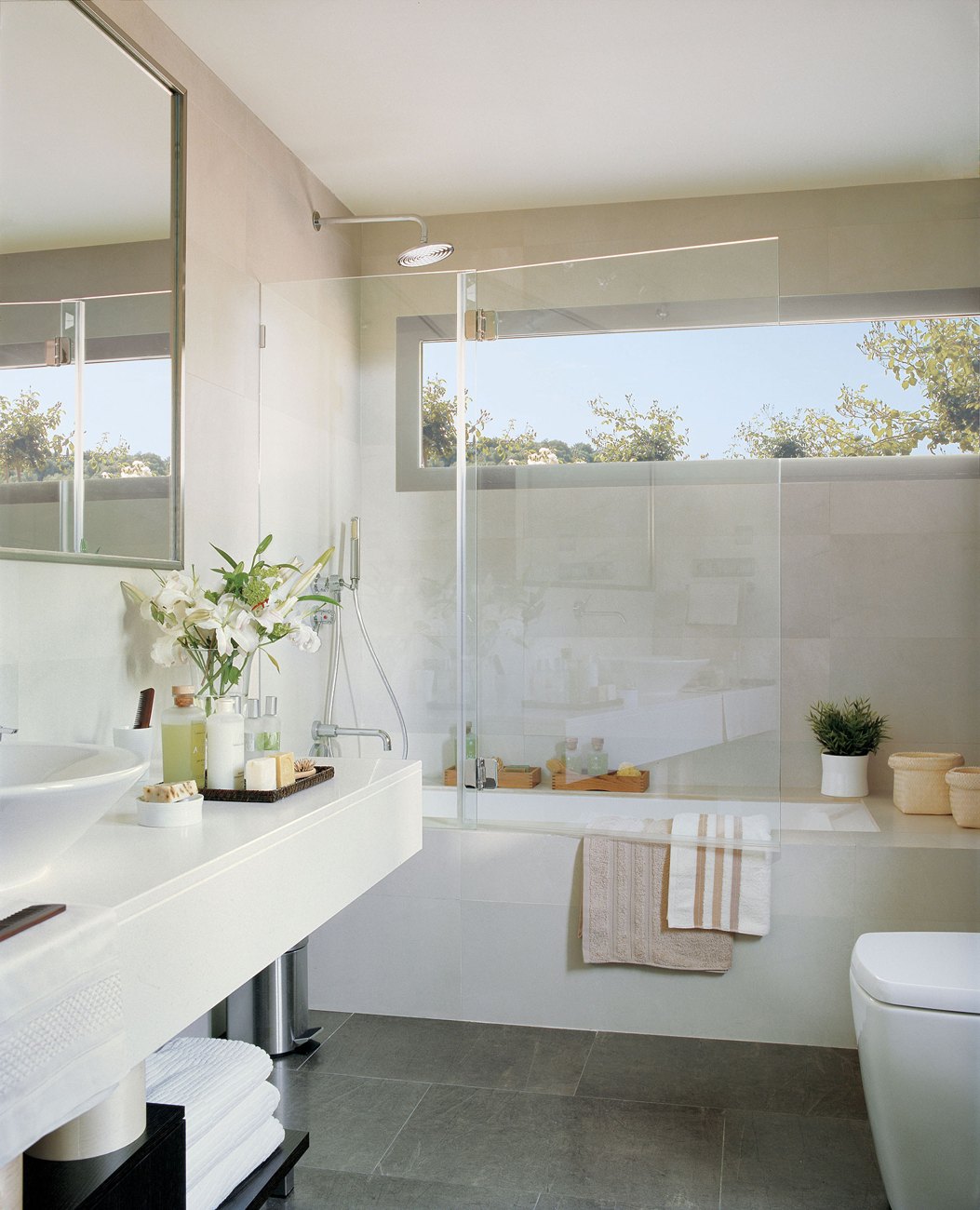
Wiped down, floor clear, nothing left on the counter — this is the handover standard for a shared bathroom.
Small habits that keep the peace
- Label your shelf. Name or colour on your fridge and cupboard space ends most kitchen arguments before they start.
- Say it early and lightly. One friendly message the same day beats three weeks of quiet resentment.
- Do one big job together each season. Oven, windows, balcony — an hour with all of you is easier than one person discovering it alone. Put music on.
- Don't keep score out loud. If the split genuinely isn't fair, fix the roster instead of counting.
- Two minutes now. Nearly every complaint we receive traces back to something that would have taken two minutes at the time.
Bins — the one everyone forgets
A missed bin night means a full week of overflowing bins, and that's how pests and smells start. Give this job to one person each month rather than hoping someone remembers.
✅ Do this
- Put bins out the night before collection day — trucks can start at 6 AM.
- Leave them at the kerb, lids facing the street, not blocking the footpath, driveway or a parked car.
- Make sure the lid closes easily.
- Bring them back in the same day and store them on the property.
❌ Not this
- Bags or boxes left beside the bin — they won't be collected.
- Bins packed so tight the truck can't lift them.
- Bins left on the street for days.
- Wrong bin, wrong week — check which bins go out on your night.
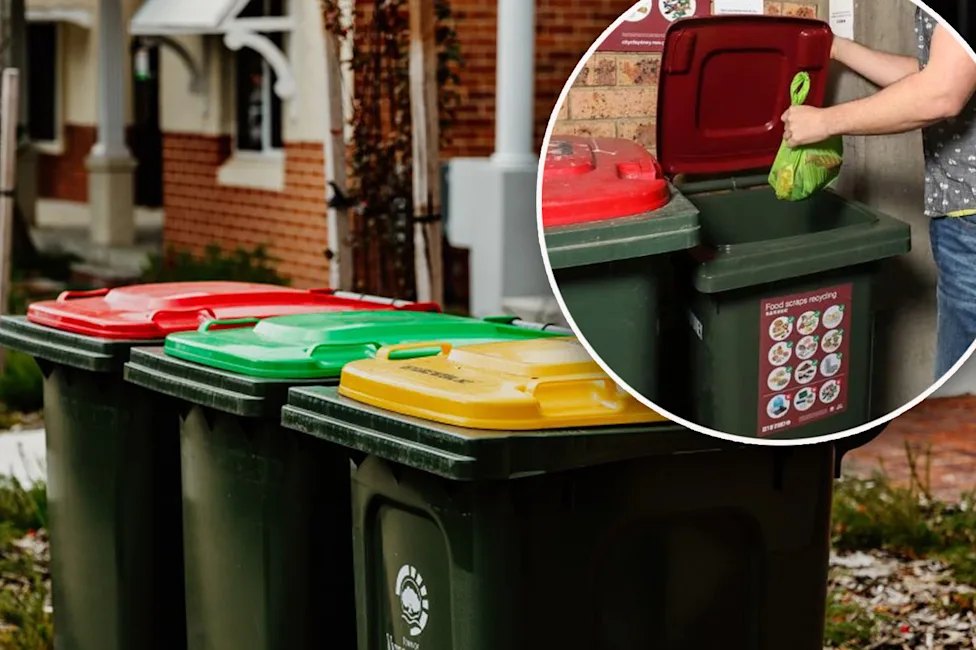
Lids closed, nothing beside them, out of the way of the footpath.
Collection days change from street to street. Look yours up once, then put it in the house chat so nobody has to ask again. If your property is in the City of Sydney area, use their bin collection lookup. Anywhere else, search your council's name plus "bin collection day" — every council has the same tool.
Which bin takes what is in the House Rules.
Housemate conflicts
Try to resolve personal disputes among yourselves first — CDA intervenes when necessary, typically where house rules are violated. If you ever feel your safety or wellbeing is in danger, call the police immediately.
Communication channels
Announcements come through the official WhatsApp account "Andy" — use it for quick questions, never for formal notices. Maintenance always goes through the form or email so it's tracked; move-out notice is 4 weeks in writing, via the Move-Out Form or email.
Skeleton staff, and no in-person move-out inspections. You can still move out, but inspections, deposit settlement and refunds are likely to take longer and may not be finalised until after 14 January. If your plans are flexible, we strongly recommend moving out outside these dates.
Room Transfers & Relocations
Want a different room, house or city? We'll help you find a better fit — across Sydney and other states.
What to include in your transfer request
- Your preferred budget
- Preferred areas or suburbs
- Desired move date
- Whether you're moving with a partner (not all rooms allow two occupants; an additional cost applies)
- Level of urgency
Send it to [email protected] or WhatsApp +61 410 069 034.
| Question | Answer |
|---|---|
| Can I inspect a room before committing? | Yes — in person, virtually or via video call. |
| Why is a room I was shown no longer available? | Rooms go fast. A room is only confirmed once payment is received — interest alone doesn't hold it. |
| Can I transfer to another CDA property? | Yes — Sydney and other states. Send your request with the details above. |
| Can two people share a room? | Not all rooms allow it. Always confirm with the team first; an additional charge applies. |
Temporary relocation for maintenance works
- Advance notice will be provided wherever reasonably possible, although urgent maintenance may require shorter notice
- CDA works with you to find a suitable alternative room or property in our network
- The goal is minimal disruption — you'll have a place to stay throughout
For occupancy needs, repairs or to avoid difficulties among occupants — always to the same room type and no lesser standard, with 2 weeks' notice.
Living Well Together
Ten habits that turn a house of strangers into somewhere you actually want to come home to.
1Share the load
Cooking, bins, the vacuum, the odd shared shop — a house runs on lots of small jobs nobody assigned. Picking one up before you're asked is the single habit that makes a share house feel easy rather than tense.
2Agree the ground rules early
CDA sends you a suggested cleaning roster, but the details are yours to settle: who uses the kitchen when, how the fridge is divided, what happens to dishes left in the sink. Sort it in the first week, while it's still a conversation and not a complaint.
3Say it early, say it directly
Most house conflicts aren't about the dishes — they're about three weeks of unmentioned dishes. Raise things while they're small and specific. If you need something, ask; if something's bothering you, say so before it becomes a mood.
4Come in with an open mind
You'll be living with people from places, jobs and routines nothing like yours. That's the part residents tell us they remember. Ask about the food someone's cooking, the holiday they're taking off work — curiosity travels a long way here.
5Make your room yours
Shared living works best when you have somewhere to retreat to. Set your room up the way you actually want it. Nobody expects you to be sociable on a day you'd rather close the door.
6Show up sometimes
You don't have to be at everything. But saying yes to the occasional shared dinner or Sunday coffee is how a group of strangers turns into housemates, and it's a lot easier to ask a favour of someone you've eaten with.
7Treat the house like someone lives there — because they do
Headphones after 10 PM. Guests out by 10 PM. No cleaning between 10 PM and 8 AM. Beyond the rules, it's simple: assume someone is sleeping, working or on a call on the other side of the wall, because they usually are.
8The kitchen is the heart of it
It's where a share house is won or lost. Clean as you go, wash up straight after eating, keep your shelf to your shelf. Then use it properly — swap recipes, cook for the house once, eat together when you can.
9Bring the good mood
Small things carry: saying hello properly, noticing when someone's had a rough week, taking the bins out because it's Tuesday. A house takes on the temperature of the people in it.
10Fix disagreements, don't collect them
Disagreements happen in every share house. Talk to the person first, hear their side, and aim for something that works for the house rather than a winner. If it can't be resolved between you, contact us — and if you ever feel unsafe, call the police straight away.
Try talking to your housemates first — most of it gets solved there. If it doesn't, email [email protected] and we'll help. If the fit is wrong, a is always an option.