 CDA Coliving
What to Ask Before You Move In
An inspection moves fast. These are the questions worth asking before you sign — and our answers to the ones people ask most.
Most first-month problems trace back to something nobody thought to mention at the inspection. We'd rather you knew everything up front — including the parts that aren't perfect.
The room
Does my bedroom door lock with a key?
In most of our properties, no — bedroom doors have a privacy lock. It locks from the inside while you're in the room, but there's no key to lock it behind you.
This is a fire-safety decision, not a cost one. In an emergency, a door must open from the inside without hunting for a key, and Fire & Rescue NSW and our team need to reach every room fast. A keyed bedroom door works against both.
What secures the property is the front door: a digital lock with codes only current occupants have, and CCTV at the main entrance of most properties. Shared common areas may have CCTV; bedrooms and bathrooms never do. Ask which applies to the property you're looking at — your agreement confirms it before you sign.
If a keyed room is essential for you, say so before you sign — we have some, and we'd rather match you to one.
Where exactly is the room in the house?
If you're a light sleeper or noise bothers you, this is the question that matters most. A room next to the kitchen, the living room, the laundry or the front door will hear people coming and going at all hours. Ask what's on the other side of each wall, and ask for a room further from the common areas.
Worth doing at the inspection: stand in the room with the door closed for a moment and listen.
Is this a twin or shared room?
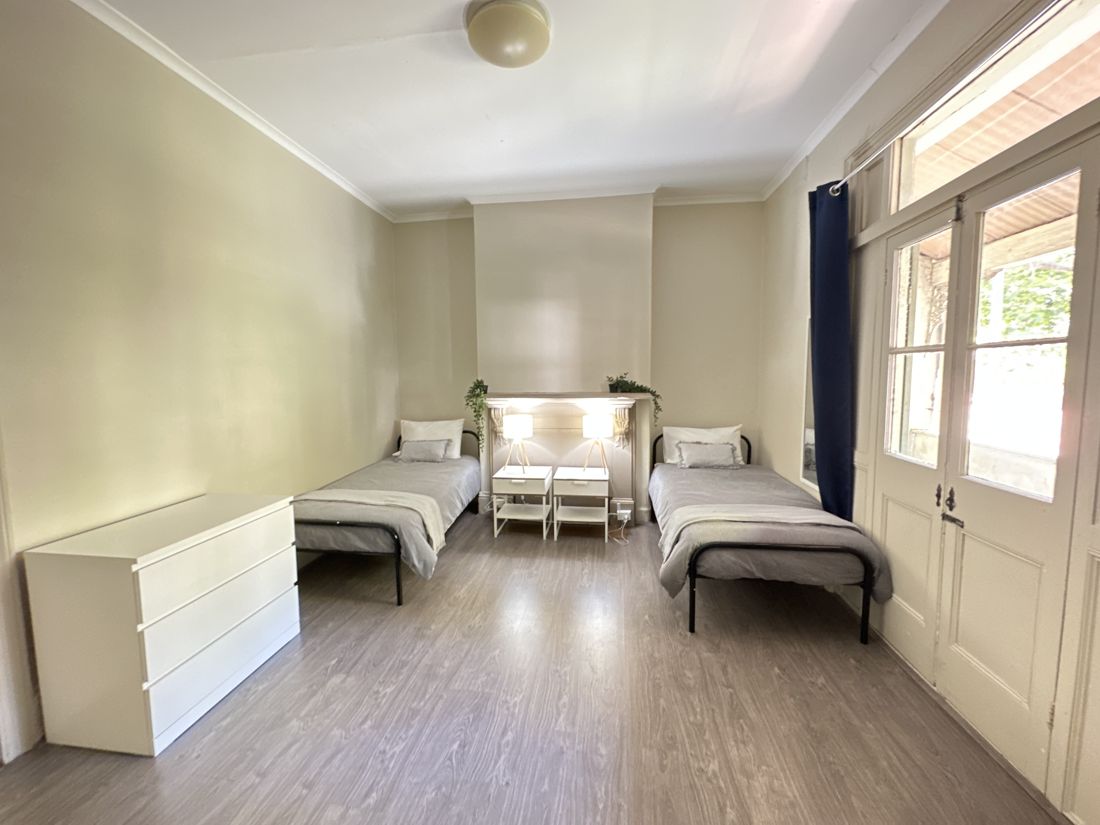
A few properties have twin rooms. They're rented as a pair: both beds taken at the same time, on two separate agreements, and both occupants move in and out together. We don't rent a single bed in a twin room.
What comes with the room?
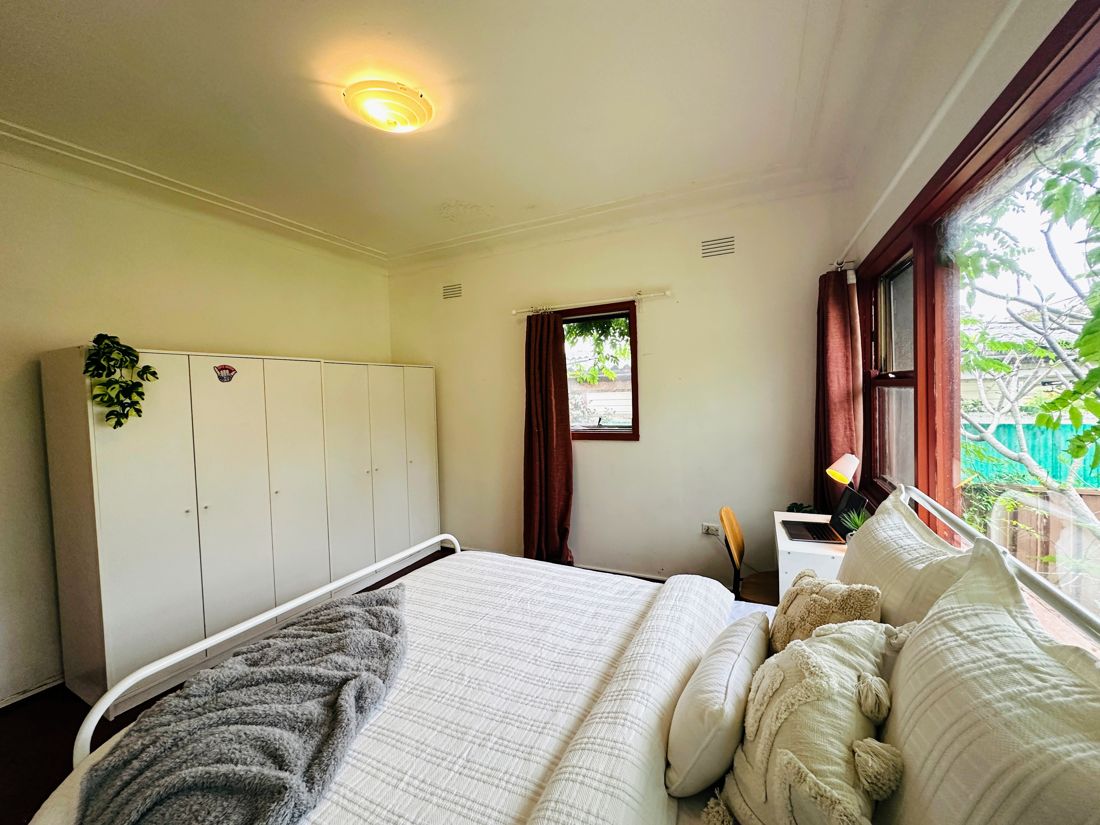
A furnished room is a bed frame, mattress, wardrobe, desk and chair. What you saw at the inspection is what you get. Ask specifically about the mattress and whether a protector is provided.
The house
What's the cleaning policy here?
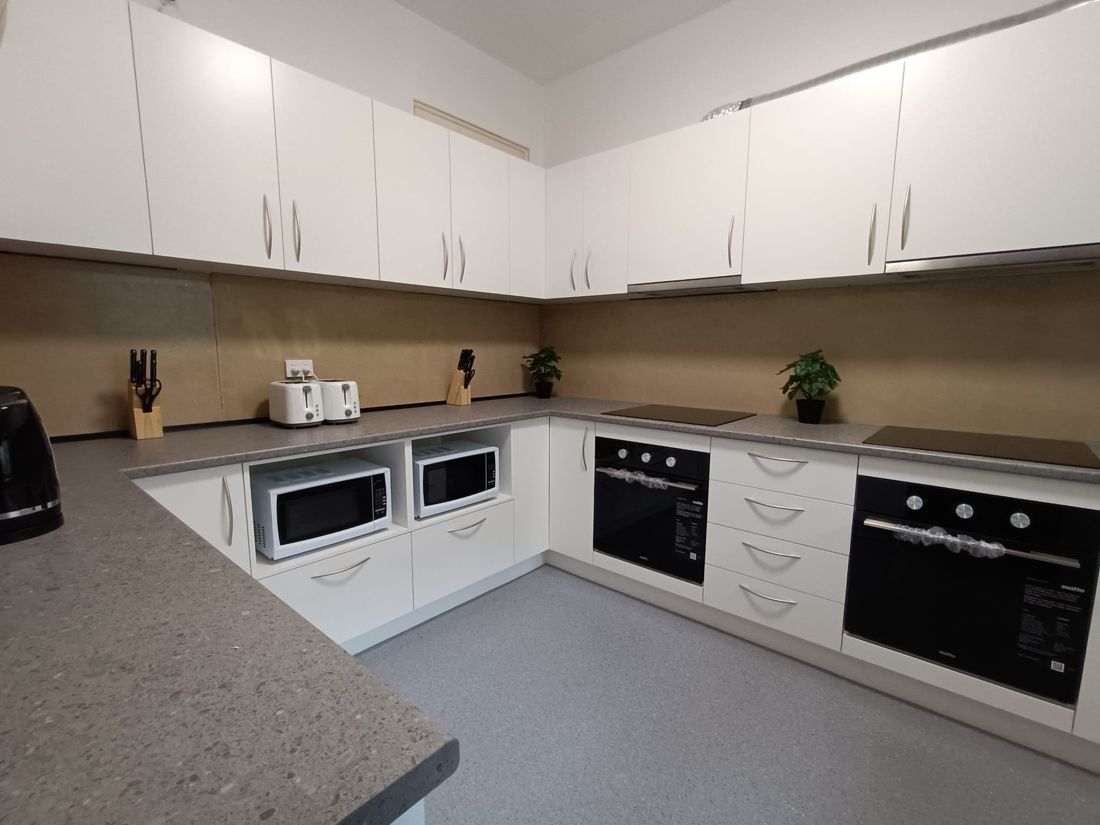
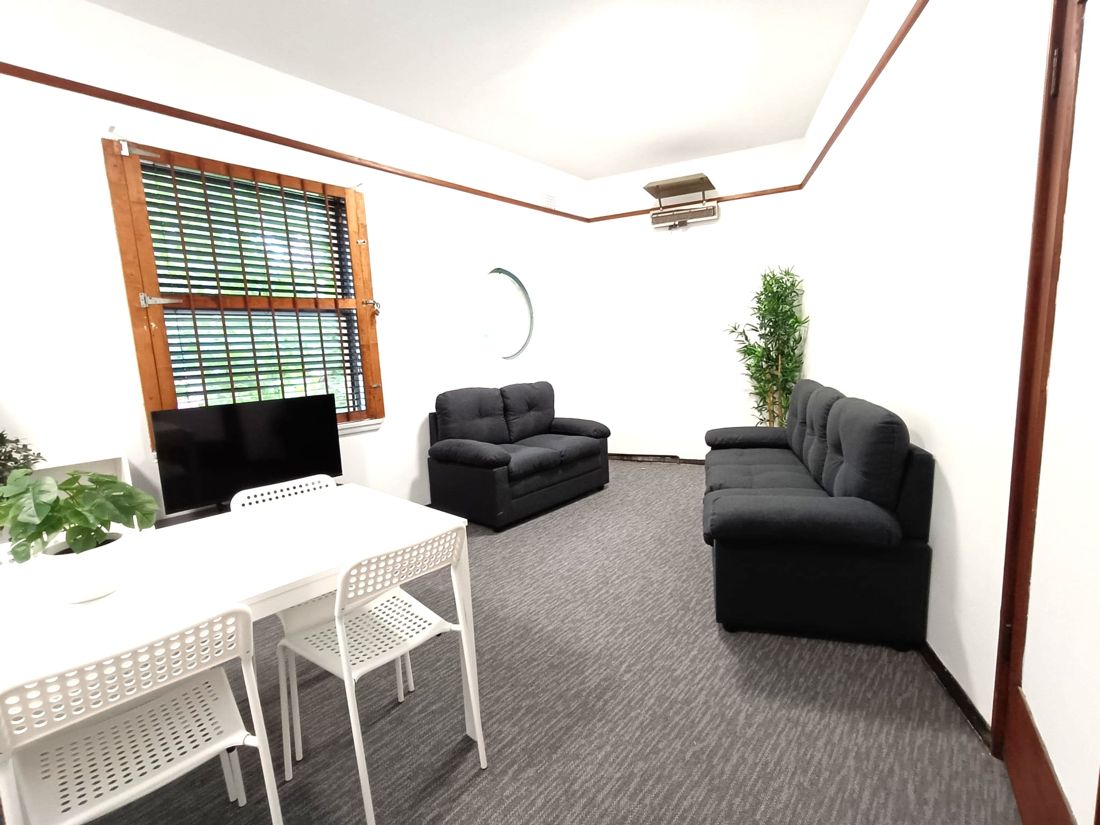
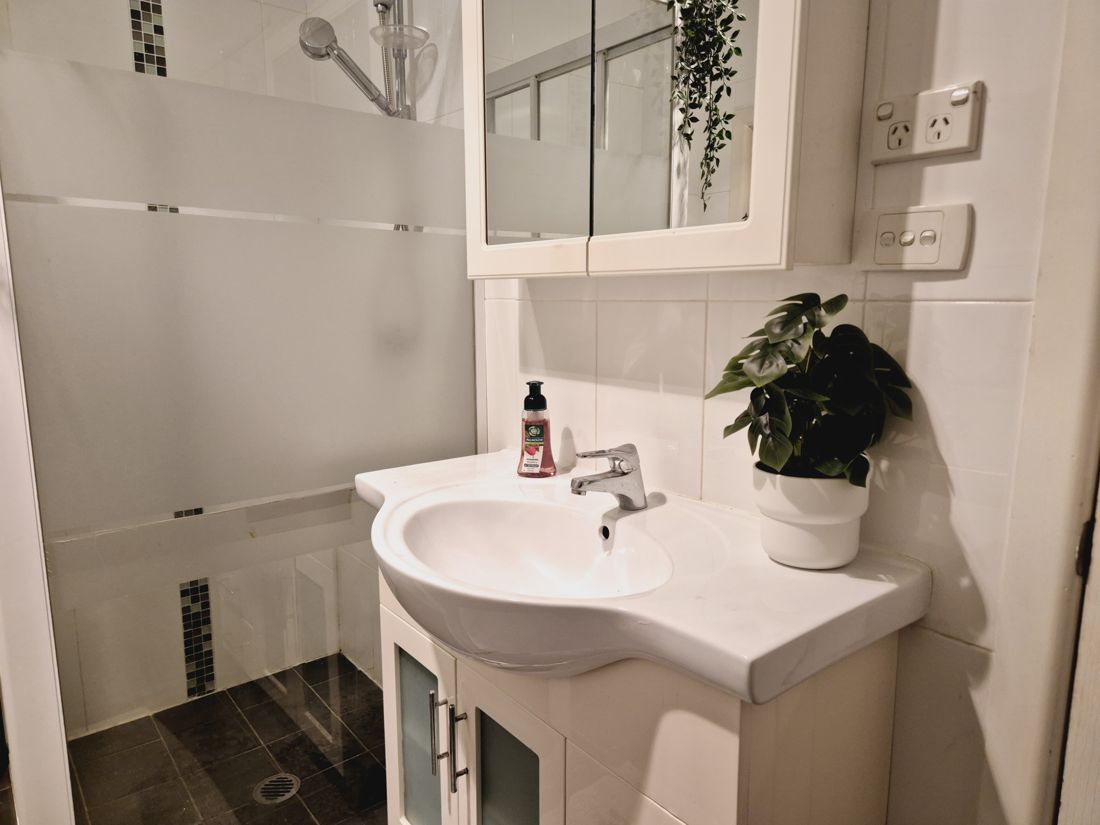
Ask this explicitly — not every property has a cleaning service, so get it confirmed in writing for the property you're looking at. Where there is one, frequency depends on how many people live there: five or fewer, no service; 6–7, every four weeks; 8–14, fortnightly; 15 or more, weekly. Bedrooms and deep cleaning are never included.
Ask how many people live in the house and you'll know what to expect. Detail in Living at CDA.
Who else lives here?
Ask how many bedrooms are occupied and how many people share your bathroom — that's the biggest factor in what daily life feels like, and we'll always tell you. We won't describe your future housemates to you, for the same reason we won't describe you to the next person who inspects. If it matters whether the house is quiet, whether people work from home, or how the kitchen gets used, ask us that directly.
Can I bring a heater or an air conditioner?
Ask before you buy. Only pedestal fans and oil-column heaters are permitted — portable heaters and air conditioners are a leading cause of house fires and overload a shared circuit. Anything else is removed. Photos of what's allowed.
What's included in the rent?
Electricity, gas, water and Wi-Fi, at reasonable usage. The Wi-Fi comes from an outside provider, so no speed or uptime is promised — if you need a reliable connection for work, plan a mobile backup. Ask about the Fair Consumption Policy too: if a bill runs more than 10% over the property's own average, the excess can be shared — always with the invoice shown.
The agreement
Demand is high and rooms move fast. A room you inspected but didn't reserve may already be taken. We have other locations available, so always check with your sales specialist that the room is still free before paying anything — a room is only held once payment is received.
What kind of agreement am I signing?
We rent both rooms and whole properties, and the two come under different laws. Which one you sign depends entirely on what you're renting.
| Renting a room in a shared house | Renting a whole studio, unit or house | |
|---|---|---|
| You sign | An Occupancy Agreement | A Residential Tenancy Agreement |
| What you get | Your own bedroom, plus shared use of the kitchen, bathrooms and living areas | The entire property, exclusively yours |
| Deposit | Maximum 2 weeks, returned within 14 days of departure | Up to 4 weeks, lodged with Rental Bonds Online (RBO) |
| Your protections | Includes 4 weeks' notice of any increase to your occupancy fee | The full set of protections that apply to a standard rental |
| Disputes | NCAT (NSW) · Residential Tenancy Commissioner (Tas) | NCAT (NSW) · Residential Tenancy Commissioner (Tas) |
Neither is better or worse — they're simply built for different things, and sharing a house is why the first one exists. Ask your sales specialist which one applies to the property you're looking at, and ask for a copy of the agreement to read before you sign.
How long is my term — and can I choose it?
The term is negotiable. We usually offer 3, 6 and 12 months, but if you need 4 or 5 — or something else that fits your plans or your visa — raise it with your sales specialist when you're closing the agreement. It's a conversation, not a fixed menu. If a term was assumed without anyone asking you, say so now rather than after signing.
What do I need to provide?
- Photo ID — the name on it becomes the name on your agreement
- Proof of your right to live in Australia
- Holding deposit or first week's rent, and the receipt — how a holding deposit works
- Rental references may be requested
We only ask for documents from the person who has been offered the room — not from everyone who enquires. Your ID is used to confirm who you are and to put the correct legal name on your agreement. We don't keep documents longer than we need them, and we never share them with other occupants. You can ask us at any time what we hold, and ask for it to be deleted once it's no longer required. Want the detail? Email [email protected] and we'll send you our privacy policy.
What if I leave early — or the house isn't right?
Leaving before your term ends, or without four weeks' notice, means a break fee — it gets smaller the further through your term you are. You can find a replacement instead: they sign a 3-month agreement, and like anyone moving into one of our houses they're screened by us before they can move in. The Move-Out Guide has calculators for both.
If the house simply isn't the right fit, tell us. Room and property transfers are possible across Sydney and other states — a much better outcome than a break fee.
Before you leave the inspection
A quick checklist
- Check the bedroom door — privacy lock or key lock?
- Note where the room sits: how close to the kitchen, living room, laundry and front door?
- Open the wardrobe, the windows and the blinds. Look at the window corners and bathroom ceiling for damp or mould.
- Run the shower, and check how the bathroom ventilates — an exhaust fan, or a window that opens. Not every bathroom has a fan, but every one needs a way to get steam out.
- Look at the kitchen: fridge space and cupboard space.
- Ask about the cleaning policy at this property.
- Agree your term with the sales specialist and confirm it in writing.
- Confirm the room is still available before transferring any money.
Anything you're not sure about, ask the sales specialist showing you the property. They're there to answer it, and no question is too small. You can also reach us at [email protected].